-1.png)
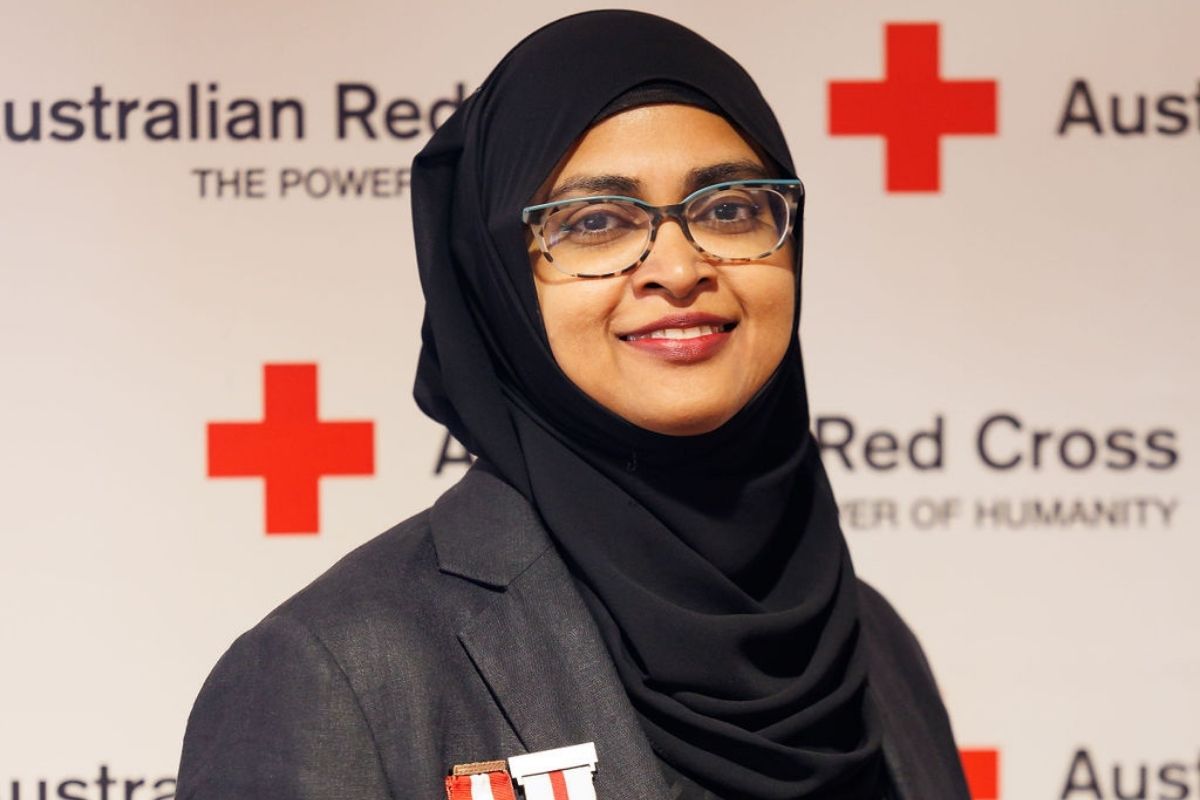
Sabeeha Nihad


Credits:
Produced by: Lucy Kippist
Edited by: Morgan Sebastian Brown
Interviewer: Lucy Kippist
Guest: Sabeeha Nihad
Mums & Co is the network helping working mums join us today at www.mumsandco.com.au
Loved this episode of Mumbition The Podcast? Find out more from our special guest.

.jpg)

This transcript was AI generated.
00:00:00:00 - 00:00:01:01
Lucy
Hi, listeners. Before we dive into today's episode, we want to give you a quick heads up. This conversation includes topics that may be triggering or sensitive for some. If you've got little ears around or feel like this might not be the right episode for you today. Feel free to skip it. We'll be back in your ears next week with something lighter. Take care of yourself and thanks for tuning in.
00:00:26:04 - 00:00:38:22
Sabeeha
My hope is to create a space where migrant women and their families can be seen supported as well as empowered to shape their own future, rather than we are trying to dictate what they should do or what they shouldn't do.
00:00:39:06 - 00:00:53:15
Lucy
Hi everyone. Welcome to this week's episode of Mumbition, the podcast by Mums and Co. I'm your host, Lucy Kippist, and today I have the pleasure of speaking with Sabeeha Nihad, the senior state manager of programs at the Australian Red Cross. Connected women is one of the programs she manages. As part of this portfolio, and it runs out of the Northern Territory to help migrant women make connections, learn new skills and thrive in their new home. Most have moved thousands of kilometres and arrive not knowing anyone and speaking very little English. So this is a place where they can feel safe, supported and valued. Sabeeha, Welcome to Mums and Co. It's amazing to have you here on the podcast.
00:01:22:13 - 00:01:24:13
Sabeeha
Thank you. Lucy. Good to be here.
00:01:24:13 - 00:01:31:07
Lucy
This probably touches on what you said at the top there, but if we were to ask you how connected women helps, if you could describe who you help and how.
00:01:35:08 - 00:02:10:14
Sabeeha
When we started Connected Women program approximately seven and a half years ago, we started purely for newly arrived migrants, less than five years. But now we have opened a program for First Nations community members as well as by the Australian community. But majority, I would say over 85% represent migrant community, very new migrants, mostly, it can be international students, temporary visa holders, partner visa holders or any other visa categories or somewhat, you know, presidents as well as citizens, but very less numbers, very, very low numbers for that. Apart from that, we have approximately 8% of, the population from the group representing First Nations community members. And rest comes from wider community. So that is a kind of, you know, breakdown when it come to the, participants, talking about 756, women and their families in this program as of now.
00:02:31:06 - 00:02:32:03
Lucy
Wow. Can you describe to us a typical day in your role and how you manage your diverse tasks and responsibilities?
00:02:39:13 - 00:02:41:20
Sabeeha
That's a very tough question, Lucy. I'm not sure where to start and where to end. With connected women, that programs comes under the migration support program. So that is a one portfolio, out of other to like, you know, altogether three portfolios I have to manage day to day. So this is only one, and under migration support programs, we support asylum seekers, refugees, migrants or any other people who's vulnerable due to their circumstances. So when I, get into the office in the morning, it can be such as, like, you know, supporting a client or doing a high level, white paper or a strategic, you know, direction development or as simple as designing and delivering a workshop or a training or a stakeholder management meeting, or simply sit down and, you know, chat with group of women and their families to see what we can do better. So it's very different. But one thing very common throughout my career, for the last seven years, every single day will give us a challenge and as well as a solution. So it is it's really inspiring as well as impactful.
00:03:50:00 - 00:03:51:03
Lucy
Absolutely. Love that. How would you describe some of the more common challenges that women are facing at the moment when they're integrating into community?
00:03:57:21 - 00:04:36:05
Sabeeha
So migrating from one country to another country is not easy, Lucy, because of the settlement issue. So it can be simply as like you know, not knowing, the language we speak or cultural shock, or it can be simply like, you know, the fear or self-doubt when you step into a new country. And also there can be issues such as, like, you know, well qualified person, but not qualified enough to work in Australia because their qualifications are not recognised or they don't know where to, get their skill assessments or either like, you know, not knowing how to apply for the jobs or the right selection criteria and visa interview. And it can be simple as like not having enough money to buy appropriate, garment to go for an interview. They don't know how they can change whatever they have to be appropriate for the occasion. So it's taking various different things like, you know, start from very small, you know, issues to, really, really large ones. And the biggest challenge, I have seen among this community is that, possible violence - domestic violence and all those other, you know, form of violence because, of the cultural differences most of the time from male dominant community to like, you know, countries like Australia, it is a cultural shock. So and relationship issues. So there can be many different, challenges they face.
But if I categorise it into a, like, you know, three key areas, not able to participate, not able to connect and not feeling safe. Those are the three key areas I think, I would like to, you know, tap into.
00:05:43:00 - 00:06:22:10
Lucy
We're aware that moving is one of. I think there's three main stressors that they've identified in a human life. One of which is divorce and one of which is death, and another one is moving. So when I listen to speak about this program, I really feel like whatever has happened in the case of these women's lives before they immigrated, when they came here, when they've arrived here, that sense of stress and the challenge of daily life, whether they speak English or not, I suppose what I'm saying is that compounds those, those previously existing issues as well. Would that be correct?
00:06:24:13 - 00:07:04:10
Sabeeha
Yes. Some cases yes and some cases, probably not. Some cases like let's take myself as example. So a lot of people think that I lived here like all my life, but I'm not. I migrated Australia only eight years back as a skilled migrant. And, the whatever the issue I describe here. So that is my lived experience as well, because I used to work as, very senior manager across most of the countries into corporate, but when I came to Australia, it was very difficult to get into the industry, which I would like to because it can be different, very different reasons. It can be like, you know, how I appear with my headscarf and you know, my ethnicity, English as my second language, my skin colour and everything else. It is not the profiling, but it is the like you know, expectation of that industry. So it can be the story of other women as well. So and then it is hard to find a job and then it is hard to, you know, get into the desired industry. So you have to get into a different industry, develop your qualification all over again and then succeed in that. So, you know, that can be that part as well. Like, you know, that self-doubt and, you know, not having that enough opportunities and nobody's there to push you up, lift you up so it can be like, you know, that sort of a component as well. So it's a mixture. But I think I must say that, the that's one of the reasons, which we created Connected Women because when we have lived experience and when people comes together with the lived experience, we can do wonders because we really know what's going on and what we need to address and how to do that. So probably that's, you know, pioneer and for us to start to connect with women and also, you know, keep doing that successfully for the last seven years.
00:08:13:23 - 00:08:36:14
Lucy
Yeah, absolutely. And having had that experience yourself, you also understand sort of what's coming, coming towards them as well. So not only what they're experiencing right now in the moment but probably what they're going to anticipate. So I really appreciate you sharing your personal experience there with us too. I think that's really important to highlight that. How many of the women in the program have young children?
00:08:37:09 - 00:08:50:20
Sabeeha
I can say, like, you know, majority of them, represent families. So they are comes with their children as well as they are other, you know, elderly parents or they are spouses. So I would say at least, at least bare minimum. half of the, cohort if I have 756, that mean half of them, will come with their children and majority of them comes with, quite young children as well.
00:09:00:03 - 00:09:20:04
Lucy
Yeah. So that in itself comes with its own set of responsibilities, as well. And challenges and joys as we know as parents, but definitely challenges as well. Let's talk a little bit about how the programs work. So you've helped us to understand the types of challenges these women are facing. So how is the Connected Women program helping address those problems and its challenges?
00:09:24:22 - 00:09:50:01
Sabeeha
The biggest problem we identified having not having that safe space to connect, because we have different platforms Australian wide, like there are different association organisations and the nonprofit organisation groups where people can connect into. But when it comes to, new migrants, they fear to do that. So what they need is a place where they can come and go as they please. No questions asked, but they can do what they like to do, or they just observe. So that is, they can be identified from the beginning. And that is why we started to provide that safe space. So whoever comes to the group, no questions ask. So they can be there, observe. And then if they wish to be a part of that, yes, they can. And then they will have the full access, free of charge, every single thing to be a part of the group. It can be simple as comfort them, morning tea, afternoon tea or some refreshments, or participate for capacity building activities like sewing classes, jewelry making, painting or some fun and engagement activities like yoga classes or dancing classes, fishing or even, you know, martial arts or some other, you know, activities or simple as, participate for a big event. So we do quite a large events here, like fashion shows, massive food festivals and events and celebration, and also social enterprise projects like food trailers go to markets and promote cultural food. We are, ladies can have that initial capital to start their own businesses. So going back, providing that safe space, providing them the support they need and also with the dignity, and then let them share their experience and exposure because they can be each other's a stepping stone as well as a support system. I think that is how we operate in this program.
00:11:14:20 - 00:11:29:07
Lucy
Sounds wonderful. And you mentioned, the connection to the local First Nations groups as well as part of the program. How disconnected women collaborate with the local First Nation groups. And how are they helping connect with that part of the history and culture of Australia?
00:11:32:07 - 00:11:56:15
Sabeeha
That's a very good question and very interesting and very like, you know, difficult ones as well, to be very honest. But I will give you a couple of example, if it may give you a kind of a clarity, the First Nations culture and migrants culture, they share many common things as well as many differences. So, the problem, sometimes when you ask a new migrant, you don't understand anything. So probably the best step is to start with the, elder who can tell them about Aboriginal culture and what it represent and what need to do, and also what we should not do. So that's where we start. So we invite, elders like Larrakia Nation if it is Catherine, traditional owners. So we invite them to come. We start with the smoking ceremonies, water blessings and some other cultural activities and then let them share that, cultural knowledge, the very basic ones, and then that help to build the relationship between two cohort that take a long, long journey, to be honest. And after that, the First Nations community members, we invite them to come for the workshops and the sessions and the event. So you will see models on the stage during our major fashion shows, because technically we have around 90 to 95 models at a time for one fashion show.
00:12:54:05 - 00:12:55:13
Lucy
Wow, yeah.
00:12:55:13 - 00:13:23:08
Sabeeha
So out of that at least, like, you know, 15, 20 women comes from First Nations community, rest comes from the migrant community and the wider Australian community. So they work together, they create their dresses together, they do their makeup together, and sometimes they share their dresses like, you know, some, migrant women will, dress up as the First Nations, women with their costumes and First Nations women most of the time dress up with, like, you know, some Pakistani, Indian and some, you know, other attire. I have seen that throughout Lucy. So that is one way to elaborate the answer for your question. And, the last one, I think which is most important, it is not only we need to get migrant women integrated into the, heritage of ours as a First Nations community, culture, but also for First Nation community to understand the migrants community and their cultural elements as well, because there are many things we can celebrate together and they love to do that. So I have seen that, the migrant women love to go and make dampa with them outside. And also the other First Nations community members love to come to our commercial kitchens and learn how to do baklava from greek country community. I have seen that many times. And also some curries like, you know, with lesser spices. I mean less chilies, but with all the other spices to make how to make curries and simple one which they can actually replicate at their own place with less facility. I have seen all those like, you know, wonderful stories, to be honest.
00:14:26:23 - 00:14:36:10
Lucy
So wonderful. It's amazing to think about how, you know, food and fashion connects women all over the world, no matter where we are.
00:14:36:13 - 00:14:41:01
Sabeeha
And also, let's say one more thing is about since it is, related to mums, how to raise children. So that is something I have seen that they share knowledge on because traditional knowledge from indigenous community, they have so much good things to share. And also migrant community, they have a different, different upbringing in different part of the world. But everything, like I think everything translate to one common goal how to raise a child appropriately. So that is one of the other, other elements I have seen within this group sharing that knowledge and, you know, expertise.
00:15:08:23 - 00:15:21:07
Lucy
What are the future goals of the Connected Women program? You've mentioned, you've got around 750 women in the program now. Is there a goal you'd like to achieve in terms of the growth?
00:15:21:07 - 00:15:21:18
Sabeeha
We would love to expand it to, Canberra as well as New South Wales and Victoria, and also, Adelaide. They are really, really keen to start this program as well. But, you know, I think we are doing everything we can and laying that foundation. So hopefully we will see this program as we are as well in future.
00:15:44:11 - 00:15:53:14
Lucy
Fantastic. Is there a story that you'd love to share with us? A success story about a woman in your program?
00:15:53:14 - 00:15:57:00
Sabeeha
There can be hundreds, Lucy. So, I'll get one recent example. The international students who came to Australia a couple of years ago and then relocated to Darwin, approximately one year ago, she came to us because she couldn't find the employment for, almost 12 months. So it was very hard on her. And then she started with us as a Connected Women member and identified that she has really good skills when it comes to painting. So we invited her to conduct some painting classes and as a resource today after like, you know, 11 months, they, successfully concluded two art exhibitions and some are already sold out. So that is a just little bit of a, you know, support that's all they need. And now she's successfully settling into a job as well. So she's doing really well. We have some participants for this programs comes from very harsh background, like, modern slavery, forced marriage, human trafficking and so forth. So for them to overcome their trauma, feel safe and connect and start their life again and come and tell us. “Look, I started my job today again, and I bought my own car and I rented the place. I'm doing well.” So that is the greatest success story of this program.
00:17:24:15 - 00:17:33:15
Lucy
Such extraordinary, achievements. And all through the power of the idea of connection and creating that psychological safety. Thank you so much for joining us today. My last question is, how could our community here at Mums and Co support your community at Connected Women? What something really practical we could do.
00:17:45:20 - 00:17:54:05
Sabeeha
There can be many ways to do this, Lucy. And, it can be partnering with us to offer trainings for mums who need some, you know, advice and support or even emotional support or be a mentor to them. And, you know, help them to understand the culture, Australian culture, and especially the system. New mum, they have no idea how to access the health system or other support system available. So probably as simple as that. Or either like, you know, come and participate for the activities we are doing and be a part of that, participate for the, you know, a fashion show or something else which we are doing and show the support. Or either they can donate. They can donate. It can be goods or it can be money directly goes to the program. So that is another way to do that. But more than monetary support, I think that emotional support, would be the best one.
00:18:44:05 - 00:18:45:01
Lucy
Thank you. It's beautiful. It's such an extraordinary program. And, she be very proud of all you've achieved. So let's hope this podcast episode falls onto the ears of people that can help to support the growth and the impact that you want to have. Thank you so much for joining us.
00:19:01:05 - 00:19:02:03
Sabeeha
Thank you so much, Lucy.
00:19:05:13 - 00:19:20:23
Carrie
Thanks for listening to today's episode. Don't forget to subscribe via Spotify or Apple Podcast. Mums and Co is a network helping business learning women to start, connect and grow. Join us today at mumsandco.com.au