-1.png)


Produced by: Lucy Kippist
Edited by: Morgan Sebastian Brown
Interviewer: Lucy Kippist
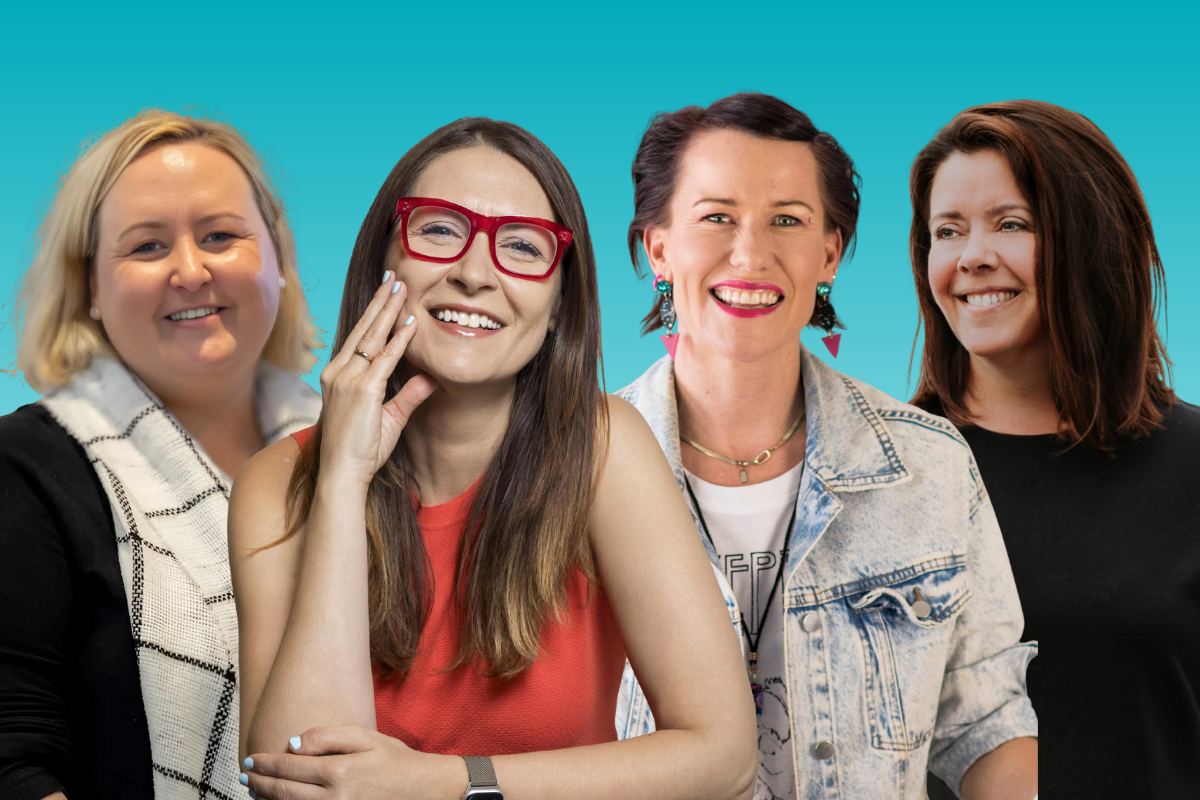
Guests: Jodie de Vries, Laura Campbell, Verity Hare, and Jo Downer
Loved this episode of Mumbition The Podcast? Find out more from our special guest.

.jpg)

Guests: Jodie de Vries, Verity Hare, LauraCampbell, Jo Downer
Interviewer: Lucy Kippist
Panel: Verity Hare, Jodie de Vries, Jo Downer, Laura Campbell
This transcript is AI generated.
Jodie de Vries (00:53.327)
Hi everyone, I'm Jodie, founder ofstrategic branding agency Tiny Hunter. I'm, it's fair to say, pretty obsessedwith the power of brand to help businesses grow. And that passion for me isbeyond business, because I really think that when businesses thrive, so do thepeople that are in them, but also the people that are around them.
Laura (01:25.77)
Hi, I'm Laura Campbell, founder of Hackerlily, and I'm on a mission to lightenthe load physically and emotionally for parents. We create practical, doctorapproved baby gear that helps you carry your kid without breaking your back orlosing your mind. And I just love sharing my founder journey, the reality ofbuilding a business from the ground up, the ups, the downs, the failures andlearnings, all while raising a family.
Verity (01:56.522)
Hello, I'm Verity, the founder of TradieWives, an online collaboration platform supporting the wives and partners oftradies in managing a business, helping elevate the women in these roles tomake a difference within the trade industry.
Joanna Downer (02:18.123)
My name is Jo Downer and I'm a femaleentrepreneur who has built a few different startups myself and now love workingwith female founders and entrepreneurs to kind of, you know, guide them alongthe pathway. It can be lonely and bumpy and there's lots of steps and hurdlesalong the way and challenges and I love kind of working with them. I do thatthrough a consulting company that I have called Monday Mojo. But yeah, I thinkthat.
It's just about supporting, you know,anybody that's crazy enough, brave enough to go and start a small business tohelp help where I can.
Lucy Kippist (02:54.029)
Awesome. Thank you all so much. I am soexcited to have not one, two, but four amazing guests joining me today for thispanel discussion. Thank you all for making the time. Now, I want to kick offwith the first question, and I would love everyone to respond to this one. Whatrole do you think storytelling and personal branding play in attracting earlycustomers? And how can women tap into these tools to connect with theiraudience?
Jodie, do you want to start us off?
Jodie de Vries (03:26.307)
Sure. think honestly, storytelling andpersonal branding are everything right now and everything, especially in theearly days. You know, when you're starting out, you don't really have a longlist of clients. You might not have case studies, but what you do have is youand your values, your vision, your story. And you need to really leverage yourpersonal networks as much as you can get word of mouth. But I think beyondthat, there's just so much noise. these days and even more so with thetrajectory of AI. So, you know, people can create all kinds of content rightnow, but what they can't do is be you. They cannot copy you. So the more thatyou leverage that, the more powerful, the more people will connect with you andthe more, you know, you'll be differentiated.
Lucy Kippist (04:14.298)
And I love that you've touched on AI. Ireally hope we can talk a bit more about that as we go on with theconversation. But reassuring to hear that from you as a professional brandingstoryteller. That's the case. Laura, how would you respond to that question?
Laura (04:32.418)
Yeah, look, as a product-based businessowner, storytelling is everything. It's basically my strategy. There's so muchcompetition out there, especially in the baby space. So many mums or mat-leafwant to come up with a business idea. And so I really felt that in the 18months before I launched, I actually started my behind-the-scenes boundjourney. I'd never created a reel before. I'd never really talked vulnerablybefore. I'm from the corporate sector initially.
I use that 18 months to really understandmy target customer and understand how I could like create my own message, myown stories and articulate it in a way that felt authentic to me. And I learnedthrough what people were engaging with, what they weren't engaging with. And Ifeel like the storytelling angle is something that everybody should have intheir business, especially the founder journey.
Lucy Kippist (05:24.152)
100 % and you do that so well. Laura's anexcellent one to watch on LinkedIn. I just love how openly you share, you'veshared every aspect of business building. Even the other day I think you weresharing about like the colour palette for your new, your new branding. Is thatright? I don't want to mess that up for you, but I'm pretty sure, yeah.
Laura (05:42.816)
Yeah, absolutely. As a founder, likethere's so many decisions that you need to make that can become bottlenecksactually including your followers and community in that decision making processmakes it easier because they're the customer. And you can create solutions thatappeal to them. But I think it's so important to also show your failures, showthe products that didn't work out show the mistakes that you've done withshipping, it makes you feel like more of a human. And people want to engage andrelate to humans as well. So
Verity (05:43.53)
It's.
Laura (06:10.55)
I love to share the positive things when wehave the great, you know, wins, the awards, et cetera, but balancing that outwith the negatives, the learning so that you can encourage other people tostart their own business or to lean more into your brand.
Lucy Kippist (06:22.903)
Now Verity, you're a custodian of ahumongous community of women. How much has storytelling played in the creationof Trady Wives?
Verity (06:34.858)
Huge, absolutely huge and I think that sortof piggybacking off what Laura said it's that relatability. In the early days Ithink it's like people sort of were drawn to the community because they couldkind of, it's like they see a little bit of themselves in you they kind of gooh I feel like that or you know this is what she's talking to and I've beenthere and I wonder how
you know, she dealt with that or navigatedthat. So I think it comes down to a lot of, yeah, authenticity, relatability,and like, just sort of, like Laura said, sharing all the vulnerability andpersonal stuff so people can kind of relate and go, I feel like that too. Iwant to be part of this and I want to, you know, be surrounded by these sort oflike-minded people.
Lucy Kippist (07:18.71)
100 % and you obviously play a reallyimportant role there too as the know the custodian of that community becauseyou're dropping in and responding to other people's fundability as well andkeeping that that storytelling going so that's really important part too I feelin your context.
Verity (07:34.634)
Yeah, absolutely.
Lucy Kippist (07:37.117)
Yeah, how about you Joe? So you've createda couple of businesses now, more than two. How would you respond to that? Whatrole has personal branding played as you've created those?
Joanna Downer (07:50.879)
Yeah, it's interesting. think it'sauthenticity touches across not just the business that you build and how youattract customers and what and what they, you know, sometimes more often thannot, we're building a business because we recognize an opportunity that, youknow, in the market or something that we would have loved ourselves. I alsothink that I love particularly about female entrepreneurs is that they, they dotell their story so well.
And they kind of show the human sides oftheir businesses, like why they exist. And for me, probably what I've beendoing most in the last couple of years is working with like an extension ofthat as businesses go on to raise funding or capital and that authentic personbehind the business and how attractive that can be to, you know, raise capitalor take on investment as you kind of go forward because, know, that
real human story, like the real need for itis such can be so powerful and that story in a pitch deck or a presentation. Soyes, it can is amazing on the customer front and building a brand and your why,but it also has other kind of these tangents where if you're raising capitaland so forth and often, you know, when we're developing a pitch deck orsomething, and I'm sure that, you know, this is probably consistent across thegroup here. If you start with your story, you know, you've really kind of capturedtheir
you know, the audience is attention and itgives you that credibility lack of the lived experience. So, you know, thisauthentic storytelling touches so many aspects of our business.
Lucy Kippist (09:23.986)
100 % and I think something just poppedinto my head then that I think is important to have in that if you're afirst-time business owner, having someone like a mentor, someone to share withthem first what you're planning on sharing, like sort of like, you know, aneditor is the wrong word, but having someone to guide that as a strategy foryou so that you're, yes, you're being authentic, but you're also sharing what'sgoing to best serve the business at the same time.
Joanna Downer (09:53.941)
Yeah, definitely. I think that often thebest pitches are the ones that are most captivating and often it can be that,you know, the product or the service or whatever it is, you iterate a businessdoesn't isn't the same as what you start with to where you kind of go, you goon this journey. But if the person shows that kind of passion and, and, youknow, real belief in it, that that's a customer buys into that. And, you know,as well as, you know, all of your marketing content and so forth.
but as equally to an investor if you'retrying to impress and show that passion for what you do.
Lucy Kippist (10:29.905)
Yeah, 100%. So possibly a question I shouldhave started with, but obviously this season is devoted to women who arestarting a business or even just considering it. And budget is obviously a hugepart of that beginning step. And most of us are starting with a limited budget.I'm sure there's a lucky few out there that have a great line of credit tostart something with, but more often than not, it is something limited.
Advertising and marketing is something thatwe're all told we need to do and obviously it's essential to creating abusiness. But how can a woman with a limited budget effectively start to targetand reach their ideal customers without really overspending in those first fewstages on advertising and marketing? Laura, how would you answer that question?
Laura (11:19.598)
What I'd say is in the first few months ofthe first year while you're building the business, really focusing on yourorganic and your own channels. And what I did in the first six months oflaunching was there's so many different messages, different pain points,different customer transformations you could communicate. There's so many outthere. It's actually seeing which ones when you put it through your Instagramor your TikTok or on your website, which ones are being engaged with more.
because there's nothing worse than spendingmoney on ads and you're putting the wrong messaging there that's just notconnecting. So I'm a big believer in testing on your own channels, seeing howthat resonates and then start to put paid behind it. One of my favouritestrategies is like community engagement. So finding those communities inFacebook, on Instagram, where you can ask for support, give back support andreally build your business community as well as your customer community. So...
definitely in the early stages forHackerlily, I managed to get up to two and a half, 3,000 followers beforelaunching through engaging in those Facebook groups. And I think that's a greatway to get feedback on your product or your service as you're building it.
Lucy Kippist (12:26.254)
Great advice there. Jodie, how would yourespond to that? What's your advice there?
Jodie de Vries (12:31.549)
I think that's awesome advice. I guess whatI'd add is I think the clearer and more specific you can be about your idealcustomer, the better. I think the tighter the focus, the easier it's going tobe able to connect with them, the less you're going to waste time and money.And even if you can just do, you know, have coffees, have conversations, talkto your ideal customer, you know, hear their pain points in their words, andyou can infuse that language into your messaging. As well as that, I would say.
Verity (12:31.626)
I'm to ask you to do the five-minutesummary of the process of solving the physical problem.
Jodie de Vries (13:01.234)
When you're being really specific, you canthink about where are they hanging out? Where can I show up and be genuinelyhelpful? You know, as mentioned things like community engagement groups, butalso, you know, beyond digital, you know, there might be local events, might beconferences, you could partner with another small business maybe that's got thesame, you know, and trust from their audience. So yeah, thinking about who theyare really specifically talking to them as much as you can and then
going and being where they are in ahelpful, non-salesy way.
Lucy Kippist (13:34.421)
Yeah and what's your thoughts on like focusgroups at that stage, at that really early stage?
Jodie de Vries (13:42.1)
I think that personally, I think you canjust be having really low-fi conversations. think having one-on-oneconversations with people, you can get so much great information and it doesn'tneed to be an interview. It's just, you know, could be a virtual coffee or itcould be real life. think just one-to-one conversations is a really great,cheap, you know, place to start. could be the cost of a coffee. They'llprobably be really happy that you want to hear and value what they've got tosay.
Verity (14:01.866)
So, thank you.
Laura (14:12.128)
And Google forms can be so valuable aswell. I was able to like host a survey the other week, get over a hundredresponses, which forms a really great, you know, survey sample as well. Sothere's great resources out there. I just wanted to add as well on my point isthat people within your industry going to industry meetups is so valuablebecause those brand, the strategic brand partnerships costs nothing. You've gotthe same audience, the same customer, but possibly you're selling differentproducts. So I've formed some really great relationships with like
the hip surfer is a baby carrier. Soforming relationships with breastfeeding pumps and pregnancy pillow brands andthings like that where you can give value to the customer and reach theiraudiences as well.
Lucy Kippist (14:56.245)
Great point. Thank you for adding that. Sowe're talking about the importance of identifying your ideal customer. But whatabout when you are looking to create a goal so you know who that customer isand working out the next step would then be how many of those wonderful idealclients am I going to need? Now, we've sort of focused on the idea of reachingyour first 1000 customers as a good place to start. But I would love to hearVerity starting with you.
Do agree with that as a good general goal?Is it too big? Does depend on the business? How would you respond to that?
Verity (15:30.026)
I think it's a lot. think a thousandcustomers is a lot. I think it's good to have goals. But also it's, mean, Ithink when I first started out, I wasn't really too numbers focused. I was justkind of like in the business, being authentic, sort of growing it organically.I wasn't too focused on hitting like a certain number. I know you have to dothat sort of financially, but
I think just enjoying the journey and, youknow, like celebrating all your wins, like even the small ones, you know, Ithink it's not like this ultimate goal of, my first 1000 customers. Cause thatis a lot. Like I don't think after six years of business, I probably don't evenhave a thousand customers. and I think that you just have to really sort of,yeah, celebrate all wins. If you get five customers, that is so exciting. Ifyou, your first one is so exciting, you know, like just kind of, it's good tokeep sight of a goal that you want, but also don't discredit, you know, yourfirst few and, you know, celebrate those wins as you go along.
Lucy Kippist (16:42.291)
I love that. I love that. The invitation tocelebrate anything. I don't think we talk about that enough. And yes, gettingyour first customer is such a mumentous mument. And so thank you for sharingthat. I also think it's really interesting to hear that you didn't start withthat goal. Because can you remind us now how many members of your community youhave? I know it's incredible.
Verity (17:04.028)
Yeah. So I've got, we've got 30,000 in ourFacebook group, but we've got across all of our platforms, we've got about45,000, I think.
Lucy Kippist (17:14.888)
Yeah, so I'm just highlighting that becauseand congratulations, that's fabulous. But yeah, I just wanted to highlight thatis your intention in starting this was not to get to that number. You probablydidn't even think of it, but there you are, you're there now. Socongratulations. Joe, what do you think about this numbering? How important isthat in terms of the way that you look at creating a business?
Verity (17:20.586)
Thank you.
Joanna Downer (17:40.869)
Yeah, it's, I think it comes from that.Does it come from that statement? A thousand true fans, you know, don't, youknow, and I think I kind of would, you know, kind of reiterate what Verity issaying. And when you start out, I think I'm building something new at themument and the temptation to go broad is, is huge, right? In terms of customerbase. But I know that I'll be way more effective if everything from a messagingto a go to market to
Joanna Downer (18:10.165)
You know, if I stay niche and specific and,and stay there, and that's what I take from the thousand true fans is that, youknow, try and try and more, more so on the sense of the word true than thenumber thousand, like just try and stay within, you know, a smaller customer,try and, know, don't try and be everything to everyone. Just have people thatyour business genuinely kind of resonates with so that, you know, you don't getall these mixed messages. You're not out there kind of.
throwing a thousand things at the wall andtrying to make it stick. If you can kind of bring it down to a single customeravatar and get people that really are like crying out for your business productservice or whatever you're kind of building and stay super focused, that's kindof more what I take away from that statement. Like how do you get those peoplethat just are raving about your business and how do you kind of find them andstay super focused at the beginning to kind of.
maximize your time, energy, resources,know, budget even. And that's probably more so what I take from, you know, thethousand true fans.
Lucy Kippist (19:17.251)
Yeah, raving fans, that's great advice. NowI did have another question for you, Jo, and it is related to this. So we aretold often when people join Mums & Co, I started out my business, I'm inthis, you know, might be in the end of the second year, third year. I wasrelying on word of mouth and suddenly it's kind of stopped or the, you know,the mumentum has stopped in that regard. How else can I grow? So.
Lucy Kippist (19:46.272)
What's your advice for that next step? NowI know that's probably difficult because you don't know what business peopleare in, but generally what would you advise someone who came to you and saidthat?
Joanna Downer (19:57.825)
100 % I think this happens to so manybusiness owners. You kind of exhaust your organic network and then you think,you know, maybe you're kind of been riding this wave of business growth basedon your own network. But I think probably to Laura's point, like you kind ofsuggested some ways that you can reach new kind of connections, whether it bethrough industry and network, like lean on the people that have alreadysupported you to kind of...
open doors and I think there's also likecollaborations and partnerships where people can kind of you know have adjacentbusinesses you have the same audience but you're you have a you know adifferent product or service what can you do there to kind of open new doorsthat isn't necessarily a big spend but you know maybe your own network istaking you so far and then you think my goodness my business is plateauing orthe demand isn't there and it's only that you just need to push into that nextphase of
connections and network. I think a fewthings we've touched on like, Verity's got an amazing community. I'm sure thatyou encourage business owners to kind of collaborate in there if they've gotcomplimentary services or products. And Laura's talked about building networkand going to industry events, but also reaching out to do collaborations orpartnership, different types of promotions with other business owners. I thinkthat you just need to kind of stretch into that next
kind of, you know, chapter of your, yourreach and it's off, you know, and it doesn't necessarily need to be confrontingor challenging. can be still quite warm and genuine, but it's just, you know,maybe people just need a little bit of support to be able to do that. And onceyou've done it, you, kind of, know, you get the confidence to keep on doing itand can, really kind of take your business to the next level. But I think thatyou're absolutely right. There, there does come a time where you can kind oftap out on your own network.
Lucy Kippist (21:55.121)
Thanks for that, Jo. Verity, just on that,what is your advice for as you've scaled keeping that personal connection?Because I know that that's what people talk about when they talk about tradiewives and you can see that from your Facebook page. There's that warmth stillthere despite the size or in spite of the size. How have you created that?
Verity (22:19.017)
I've had to, I've implemented aself-developed method of the grow and pause. So it's like, I'm, I was very, youknow, about, you know,
All the things I wanted to do, all thethings like we talked about, trying to be all the things to all the people. SoI was constantly, you know, pulled a million different ways and I had to reallythink about, like, I go through a growth stage and then I pause and I don't, Idon't focus on growth anymore. I just focus on integrating that kind of growthperiod. So I do a grow and then I'll pause it and really make sure whether it'snew members into the community and new product or service that we've developedthat it integrates.
that it all runs smoothly before then goingon to the next growth period. it's just kind of like, you know, stopping andreviewing it, especially when it comes to like my Facebook community as well.Like when I let an influx of people in just making sure that they kind ofunderstand the lay of the land and the way things work and the way that we,that we talk to each other and communicate and making sure that they're notkind of upsetting the apple cart and that they are, you know, not going tothrow off that personal,
you know, nature of the group that we'vedeveloped over the years. So yeah, so it's definitely, think, sort of growthand then pause and making sure that that integrates before going on to the nextgrowth stage.
Lucy Kippist (23:44.99)
Love that advice, thank you. Jodie, nowcontent marketing obviously plays a role in this too, in terms of attractingnew customers beyond that initial referral loop. Can you share some of thestrategies that we can use to do that really effectively as an early stagebusiness owner?
Jodie de Vries (24:05.262)
Yes, content, content, content. That's athing, I guess. You know, I always like to say perception is reality. It isreality. It's how your product or your service that you've worked so hard onshows up in the world. And, know, sometimes there can be a disconnect. Soyou've got this really high quality, you know, premium product, but then that'snot reflected. And so many people that come into contact with you.
and not ready to buy. So you need thatcontent to build the trust and the credibility. And I guess it helps you scalein a way beyond that word of mouth. think it's, I think it's a big pain pointfor all business owners. And I think it's, you know, trying to be focused. Youcan't do everything. You can't be everywhere. You just need to be reallyintentional, figure out what your audience cares about and think about how youcan add value to them, how you can be.
helpful to them. And whatever it is thatyou're doing, you know, consistency really helps in terms of buildingfamiliarity. So, you know, it might be something simple, you know, you'reshowing up each week with a tip or a story, building that authenticity thatwe've been talking about, and just trying to become that go to that they trust,and then eventually will buy from. So yeah, being consistent, you know, showingyour values.
Any content that you are creating, thinkabout how you can get more out of it, how you can repurpose it. Not just, youknow, create one piece and send it out into the world. If you do somethingthat's longer form, how can you, you know, take a blog post and get, you know,10 different social posts from it? Can you make a video about it? I think withcontent too, it's really hard because different people have different styles ofcontent, right? You might be someone that really likes video or you like writing.
Jodie de Vries (25:59.895)
And I think don't fight what you naturallyenjoy and are better at. Don't listen to, should be doing this and you shouldbe doing that. think find something that helps you lean into your strengths andthen just double down on that, but make the most out of it. And I guess aboveall, just try and make it as human as possible because there's such aninundation in terms of AI content and AI sounding things and AI comments. just,yeah, again, just be you as much as you can.
you or your brand, you know, I guess we'vegot solopreneurs and, you know, small business owners that might have a team.So yes.
Lucy Kippist (26:35.704)
just in terms of building a strategy aroundthat too, I know this is probably a huge question, but just in terms ofobviously you're going to start out thinking, okay, well, in my case, you Ilove podcasting, so I'm going to do a podcast every week to promote mybusiness. Then you get certain, you know, a certain point down the road andyou've got to review that and think, okay, so the content has to be slightlydifferent. Like what's a good rule of thumb in terms of I've got a strategy forwhat, like three months and then you review it at that point or six months or?
or how do you sort of approach that fromthe early?
Jodie de Vries (27:10.384)
I think keep it simple. I think it reallydoes help to have a plan on a page in terms of what you want to do. And Ithink, you know, people, you know, even when they're posting, it can make it alot easier if you have a bit of a structure. So if you know that everyWednesday you are sharing something that's a bit more behind the scenes, bitmore founder's story, you know, on a Thursday, you're going to do somethingthat's a bit more educational in terms of your space or whatever it might be.
Jodie de Vries (27:34.807)
So I think, having themes or pillars of thetype of content that you want to make really helps just takes away one morething to think about. I think you constantly need to be assessing, I guess, andseeing some, you'll start seeing patterns that some things will work. Somethings might not be working. What can you adjust? I think if you can create alittle bit of content in a batch,
Jodie de Vries (28:02.06)
and have some that's pre-prepared that doeshelp because small business owners are the busiest people in the world. Andyeah, if you can have a batch, so you've got some things ready and then youdon't lose that pleasure of being able to do something ad hoc because you knowyou've got these other things that are pre-planned and working for you. Soyeah, does that help? Just to answer your question.
Jodie de Vries (28:28.297)
And you know, I've got to add one morething. Sorry, I'm just thinking one tool that I find can be helpful is thinkingabout that customer journey, right? So you've got the people that don't knowanything about you. So that's kind of like they need the awareness. Then you'vegot the people that know you and they're thinking about you. Then maybe theybuy from you and then, and then you've got the people that have bought fromyou. So I think it can help to just draw those sections and think, what am I doingin each of these places?
know, because maybe you're doing greatstuff in the middle, or you're really good at keeping, you know, existinghappy, but you've got no one coming in at the beginning. So thinking about thatwhole journey and making sure that you do have activity in the differentplaces, I think can be helpful.
Lucy Kippist (29:09.387)
Yeah, that's a great tip. Customer mapping,customer journey mapping. Super. I feel like we could have a little. Yeah.
Jodie de Vries (29:13.268)
Yeah. And I think it can be really simple,right? You know, but I just think using that as a lens for how you're thinkingabout what you're doing can really help.
Lucy Kippist (29:23.103)
Yeah, so yeah, there's some clear themes inthis already. It's about, you know, identifying your ideal customer,identifying their journey and identifying knowing yourself really what what'swhat's important to me? What methods am I sorry, what what channels do I like?What what kind of content am I is the easiest for me to to create? Do I feelpassionate about so just some clear really simple things Laura, I would love tobring you in at this point because I know you touched on this earlier.
Is there anything you're absolutely bustingto say in response?
Laura (29:58.446)
Regarding social channels and contentmarketing. I think the biggest advice I'd have for people wanting to get intoit is to just get comfortable with being awkward. I, guys, you can have astrategy, but the market and the platforms and the channels are changing sooften right now, planning six, 12 months in advance. I'm a big believer in notgoing towards friction. So I'll put a lot of things out there on differentchannels. No idea if they'll stick, but I love experimenting.
Lucy Kippist (30:01.086)
Yep. Yep.
Laura (30:27.648)
and you'll be surprised sometimes at whatsticks, then you can create a strategy around it. So I think it's reallyfocusing on how much planning do you do or just get out there and do it, seewhat you enjoy doing, see what feels aligned to you, see what people engagewith, and that forms the basis of your content strategy and how you buildcommunity.
Lucy Kippist (30:48.69)
I love that advice. And what does that looklike practically? are you setting aside time in the week to experiment withthat in the month? Like, how do you... Yeah, how does that look?
Laura (31:01.294)
It's normally with a glass of wine in anevening. When I can't do, you know, really thoughtful strategic things, mybrain's dead at end of the day. Maybe I've got maths on the TV, I've got aglass of wine, I've heard about this new app, I've heard about this newcommunity group. You go stalk people, turn it into a bit of a fun exercise. Soyeah, I've definitely found some communities and things like that. And oftenI've now got a virtual assistant in the Philippines.
Lucy Kippist (31:04.264)
Nice.
Laura (31:28.268)
So I'll actually get her to go and do a bitof research for me, see what the competitors are doing, see what other brandsin the baby space are doing, and then let's regroup and talk about that. Butwhen it comes to like scaling up on those channels, all those communities thatyou find, I've started to use a few apps to help me automate it. So one of myfavourite ones at the mument is actually repurposed.io. I'm not sure if anyonehere has heard of it.
Laura (31:55.158)
I'm learning now that I feel natural inInstagram and Facebook. I know that mums, when they've got newborn babies,they're going to be there. They want to be part of communities. So I'm turningup where I feel comfortable. TikTok is not comfortable for me. Like I've notgot time for it. There's lots of hooks. There's real time things and it's just,it feels friction. There's friction. It doesn't feel aligned. So I, all of myInstagram posts and reels just get repurposed to TikTok.
When I've got more money, more budget,someone to help me, I'll create an actual strategy there. But now it's given methousands of views, impressions and engagements each month. So it's better thandoing nothing. I've got my Instagram reels are getting published to YouTubeshorts. Some of them have popped off and I've gotten thousands and thousands ofimpressions and clicks and views. So I'm, I'm learning through testingautomatically. When I start them, see them start popping off more, I'll putmore time and engagement into growing them.
Lucy Kippist (32:50.774)
Hmm love that experimentation with a glassof wine sounds pretty good. Thank you and actually Instagram Instagram toYouTube shorts, that's super cool is Yeah
Laura (33:02.74)
Yeah, it really is. And it's the foundercontent that really pops off on the YouTube shorts. And interestingly, then I'mable, whilst I'm doing all of that for free, the ones that are getting engagedwith most are the ones that I'm then putting money behind in Google ads or inmeta ads. So that's a really good testing ground.
Lucy Kippist (33:21.297)
Hmm. Thank you for sharing all of thatLaura. Does anyone want to chime in at all? Is anyone busting to say anythingin response to this?
Joanna Downer (33:31.785)
I was just gonna ask you.
Verity (33:32.306)
a lot as well. It's so good. I'm like,yeah, yeah, I'm writing things down as I'm going. I'm like, it's great.
Lucy Kippist (33:33.72)
Yeah!
Joanna Downer (33:36.897)
That's good. I was going to ask Laura,Laura, you've done so many, you just like, if you had to bucket your themes ofcontent, Laura into like, I think I probably see a lot of your behind thescenes founder stuff, which is really authentic and obviously resonates with meas someone that's, you know, kind of
Lucy Kippist (33:39.777)
Exactly, very good.
Joanna Downer (34:01.045)
taken the journey as well of being a smallbusiness owner, do you consciously kind of put your content into buckets andfind that some convert more than others into actual customers or how does it?
Laura (34:12.076)
Yeah, definitely. this kind of, there'slots of pillars when it comes to actually like, I've got different customerslike mum's dads, grandparents, etc. There's lots of micro ones. But the mainones for me are education, like it's a, it's a new product category inAustralia, my product. So I do lots of education around it. So that's one.Proof is another one to build trust. So I'll talk about the doctors, I'll talkabout the reviews, I'll
talk about the awards we've won. Anotherone is like my founder content, behind the scenes, my perspective. And Igenerally tend to go around those. One thing I do wanna focus more on is havingmore fun. I've just rebranded, it's all about being more about laughing aboutthe chaos of parenthood, clever hacks for parenthood and really bringing morevalue. I really believe in that, but I don't enjoy creating that content. It'sso hard to find a good meme and then to go and create a carousel about hacks forthis.
I need to sort of find a work stream forthat because I know it's really beneficial for my community. So I know there'slots of areas I need to grow in as well, but you can't do them all at the sametime, all at once, all yourself.
Joanna Downer (35:21.441)
So, I mean, that's great though. Like, youknow, even just that information of the way you think about those three, youknow, buckets, you know, obviously you're ticking off like the people thatwanna follow you and are passionate about supporting your business and otherbrands that might wanna work with you because they're like, wow, she's like me.You know, I can, you know, reach out for some kind of, you know, networkopportunity or collaboration, but then, you know, you kind of ticking the boxon you know, products.
Laura (35:39.181)
Yeah.
Joanna Downer (35:49.673)
you know, why doctors and kind of, know,all of that kind of trust, building the trust in, and then speaking directly toa customer and understanding their pain point.
Laura (35:58.85)
Yeah, yeah, it's interesting you can takeit too far sometimes. So the other day I did post on LinkedIn and then removemy article because I love showing the failures. That's how you buildcommunities showing I totally after this up, but this is what I like and whatI'm taking away from it. But right now, to a degree, I need to be kind ofperceived to be a bigger brand because I'm trying to enter new markets. I wantto get wholesale distributor deals with brands in Dubai and the UK. So talkingabout
Lucy Kippist (36:00.044)
Yeah.
Laura (36:26.316)
my mistakes I think are okay in a certaindegree on certain channels and I'm learning that balance but you only learnthrough doing so I'd say to everyone have a go see what see what feels awkwardand different and try it and you can always delete it you can always remove ityou can always improve on it but just do it to start with.
Lucy Kippist (36:45.271)
Great advice. Great advice. Thank you forsharing that Laura. Jodie, were you starting to say something before? Did I cutyou off?
Jodie de Vries (36:51.944)
I was just going to say, think we've justnailed small business in a sentence. Experimentation with a glass of wine. loveit.
Lucy Kippist (36:59.703)
Yes. Maybe it could be our new slogan hereat Mums & Co. not sure if that would fly with our new... Yeah, maybe not.But yeah, I love it. Thank you all so much. And yes, this is exactly the kindof vibe I wanted to create from this conversation. just... Like a one-to-oneinterview is great, but like four amazing brains is, you know, even moreamazing. So a couple of last questions before we wrap up. I just want to touchquickly...
on partnerships and collaborations. knowwe've kind of skirted around that in terms of a little bit. Does anyone haveanything they want to share about that, about approaching those? Is when youstart a business a good time to do this?
Jodie de Vries (37:45.895)
I think anytime is a good time to do this.I think, you know, it's really about relationships and you know, you want tofind individuals or businesses who've got the same values as you and share anaudience, you know, sort of adjacent. And I think we've touched on this alittle bit. So, you know, and I think you don't need, it doesn't need to besome massive thing. It doesn't have to be complicated. I think it can be, youknow, you may be doing
Laura (37:46.572)
Yeah.
Jodie de Vries (38:15.066)
a joint Instagram live or, you know,putting some products together for a giveaway or something simple. The mainthing is you just want to make it win-win and you want to show that you'vethought about that when you're reaching out to someone that you've got an idea,you've thought about them and what's in it for them and make it really easy, Iguess, for them to say yes. And I think if you do it, you know, withgenerosity, great things can happen no matter what size you are.
Lucy Kippist (38:41.25)
Yeah I love that. So it's so important theintentionality of something is so so key. Verity I know you guys have had somegreat wins in this in this partnership space even really recently. How wouldyou what would your advice be?
Laura (38:41.41)
Yeah.
Verity (38:55.774)
Yeah, agree with Jodie. It's got todefinitely be win-win. And I think that it is about how your brands naturallywork together to solve issues or problems within your business. So for us, welook to other businesses. So in our community, we often see a lot of the sameproblems coming up. So we sort of think, okay, who can we partner with that cankind of help?
solve these issues for our community thatkind of do the same thing in the same industry. So we're always looking topartner with people that can help us solve these problems, but also who canhelp us to kind of create the change that we want to make within the industrywith their networks and that sort of stuff. But very importantly, like Jodiesaid, has to be win-win.
There's got to be an equal balance in termsof partnerships when you're reaching out to people. So I think that's somethingto definitely keep in mind.
Lucy Kippist (39:56.072)
Hmm, salient advice. Jo, Laura, anythingyou guys would like to add?
Laura (40:01.686)
I'd love to share just one or two things.And I think it's really important with partnerships, especially when you'resmaller. So I've got 10,000, almost 10,000 followers that's still quite smallcompared to some brands that I would love to partner with. So a lot of thetime, if you want to collaborate with bigger brands, about two months ago, Imanaged, now this was a little complex, but I'd give away with 15 brands. I didall the legwork, a landing page to collect emails for the chance to win theUltimate Mama giveaway.
What this meant was these big brands with ahundred thousand plus followers, they didn't want to run a big complexgiveaway, but they were really happy to be part of one. And we managed to getover 700,000 followers together through 15 brands and get lots of followers,get lots of email addresses. And I think that's a really interesting way Ibuilt direct relationships with them by doing the legwork as the smaller brandand got access to their followers at the same time. So be prepared to put a bitmore work in if you want to work with an aspirational brand or partner.
Laura (41:00.194)
And at the same time, thinking outside ofyour category. So I've wanted to partner with doctors, physios, osteopaths tohelp bring credibility to my business. And a lot of them want to build theirown following. They want to be seen as thought leaders in their industry. So goand offer to do a Q and A to get some questions for a blog. You get reallyhonest testimonials and comments that sit on your website. They can be turnedinto social, collab social posts. So I always lead with bringing value to them.
so that it's mutually beneficial, but leadwith the value to get those partnerships you really dream of.
Lucy Kippist (41:34.113)
love that love that Jo what about youanything to add there
Joanna Downer (41:38.949)
I would just say like, you know, don't beafraid to reach out for a collaboration if you're brand new, because you mightbring something completely different to the collaboration. Like to Laura'spoint, you might bring time or you might bring like effort, you know, you mightbring expertise of, you know, something you've done previously being, beingearly to market doesn't necessarily mean that you aren't a good partner foranother bigger, you know, perceived, you know, bigger brand, because you mightbring something completely different to the table.
but just, you know, be creative and be opento other opportunities and don't be afraid of getting, you know, no, it's notfor me right now. Like, because that's probably happened to all of us in, indifferent situations. It doesn't mean that's a no forever. It just might be forwhatever reason, the other brand or who you're reaching out to, it's not theright time for them, but you know, you might've built a connection that willbear fruit down the track, or there might be another opportunity to work with adifferent company. So I think it's just.
Sometimes don't overthink it, just go out,think about what am I bringing to this collaboration or partnership. Start withthat to Laura's point, like go in with, what do you bring and what's the valuethat you're offering? And then you just don't know where that conversationmight go. It might be something you never thought of. So yeah, be bold andbrave.
Lucy Kippist (42:59.831)
Great advice and don't be afraid, don't beafraid of a no. Because there might not always be a no. I love that advice. Thefinal question I wanted to touch on was just, you know, well-being forourselves in this time of starting a business. Or, you know, more and we'reseeing women who are doing a job already and thinking about a business. Butwhat would you guys advise a woman who is about to start or is starting?
or is in the early stages of a business. Interms of looking after herself, what's one thing that you guys do to keepyourselves, I suppose, sane, balanced, happy, reminding of your purpose and whyyou're doing this? Is there something that you really love doing that helps youfeel connected to yourself throughout all of this?
Joanna Downer (44:05.441)
was gonna say, like find people that are inyour corner, right? Because we're all projecting this persona out there thatwe've got our act together, we all know what we're doing, it's all perfect, andso on and so forth. But if you've just got someone else and not necessarilyyour friends or family, because they can get a bit sick of hearing us bang onabout our businesses and it's not, you gotta kind of find the space, I guess.
but just have a couple of good people inyour corner that you can kind of go, you know, that understand where you are onthis road.
Laura (44:38.978)
Yeah, I couldn't agree with that more. It'slike finding, turning up and going to meetups or community groups to actuallyfind your people. And I think it's great chatting here. I have so many Googleand Zoom chats, but I personally crave that human connection. I moved to theGold Coast. I didn't know anybody and through...
a little bit of networking, putting myselfout there. I've got my girls who I can just message on WhatsApp and be like, mysales tanked today. How are you feeling? Like this moral support for thejourney you're all going on. And then the other thing is I go love to go towork at a cafe that's attached to my gym. I do the work, I'm in the space, I'min my workout clothes, get three hours of work done. And then I can just likedecompress and be a better person. My husband prefers me more when I've had a workoutduring the day.
Lucy Kippist (45:28.838)
How about you Jodie, what's your secret?
Jodie de Vries (45:32.355)
I wish I knew the secret. I do think thatit's really important. What I found helpful is figuring out what gives meenergy, what drains my energy. And I guess trying to be conscious, even thoughI've got a lot of moving parts, how I structure my time. So I'm doing the rightthings at the right time. Like I'm really good in the morning. I've just, I'vegot that blocked out. It's kind of like my time to think and be more in flow, Iguess, and have
you know, meeting free days help too, ifyou can do that. So just, really try and think about my time and how I canspace it out so that I've got energy. And yes, for me, I've realised exerciseis really important. It's gonna be a really long time to figure that out. Butyou know, I'm really trying to make sure I prioritize myself and my exerciseand things like that, because then I'm more productive in the business and youknow, better for the family as well.
Lucy Kippist (46:28.254)
I love that and Verity I wanted to ask youbecause I know how many business owners you know you're connecting with atTrady Wives and I know that mental health comes up a lot. So is there somethingthat you notice that you know the women quarter your community are doing tokind of protect theirs? I mean aside from having that incredible space to sharewhich I think is really
Verity (46:54.602)
think it is, yeah, just making sure thatyou carve out time for yourself. And I think as well, like four aretradie-wise, they're kind of, you know, they're working with their partners andobviously they're living together, they're married, it's all very intertwined.So I think having clear boundaries and clear separation between, you know, workand life is really helpful. And also, yeah, having some time away just foryourself and making sure that you...
it in the someone gave me some advice oncethey're like make sure you put your time in a diary as if you were to zoommeeting or anything like that so like it's in the diary it's booked you have todo it and it's it's hard it's it's a discipline because it's sort of likeyou'll see it and you'll go no i'll just move out i'll add this meeting andi'll do that but you have to have that that discipline because it reallybenefits you in the long run and i think as well like for me i don't work
on a Friday generally. usually don't plananything for a Friday and I go and do something that I enjoy but definitely youdefinitely have to have that time away and book it in as if you would any otherappointment.
Lucy Kippist (48:03.847)
Fantastic, love that advice. Thank you allso very much for joining today. It's been absolutely delightful and what abrain's trust this is. I hope we can do it again in the near future